Researching How to Make Bread
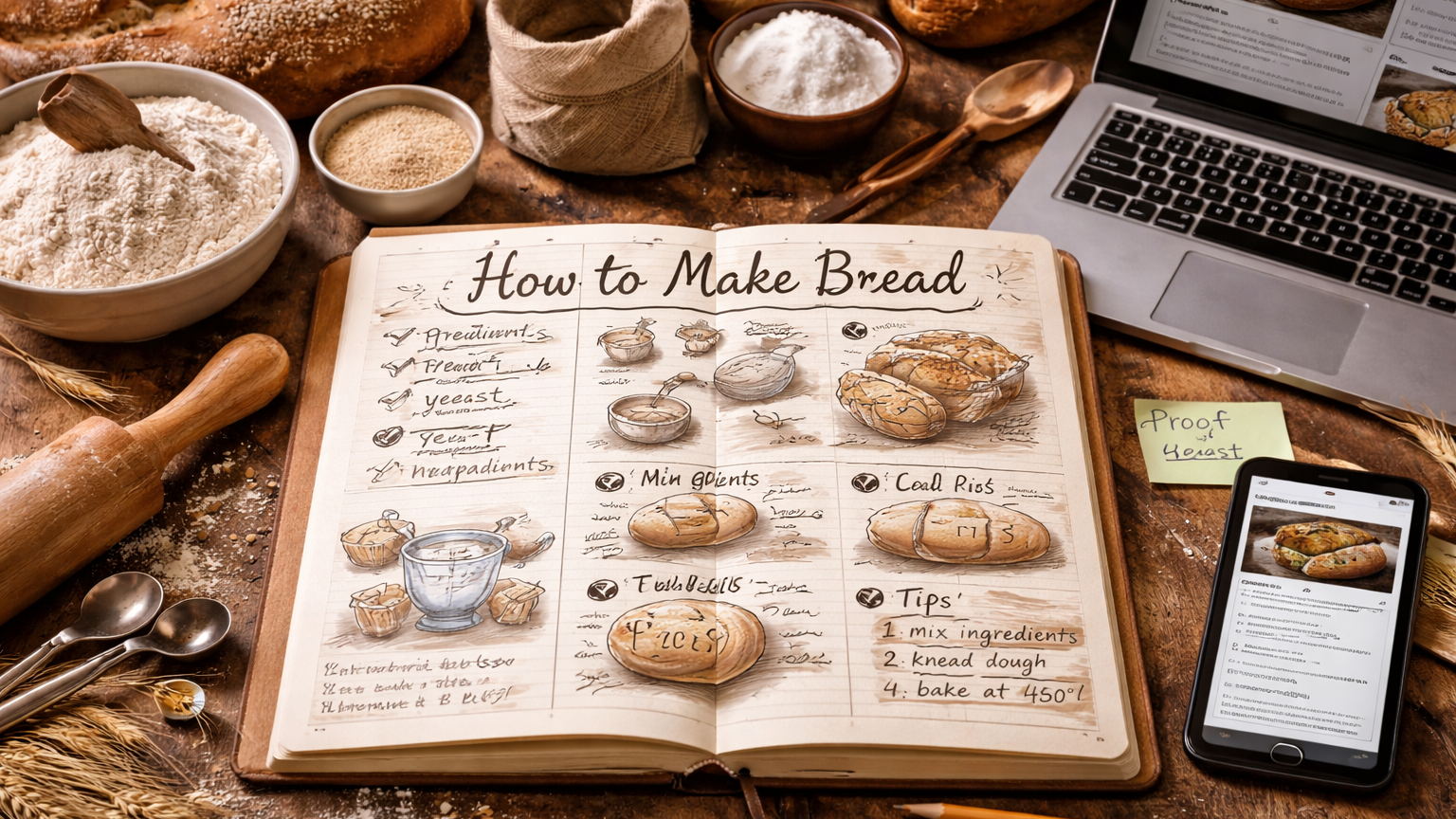
I am going to start the process of learning how to make bread by conducting in-depth research online through a mixed-media approach. This blog post will document my steps and thinking through the start of my research journey.
Reflecting back on my first attempt at making sourdough bread, I did not do a lot of research. I had found a couple of TikTok videos that I liked and decided to just follow their instructions. I can admit I was impatient and did not approach it critically. Therefore, for this experience, I will take the time to review different sources before jumping in.
To begin, I went onto TikTok and Instagram and searched “bread recipes.” I wanted to have a quick introduction to different recipes and methods. These are some of the videos I came across:
https://www.instagram.com/reel/DPCfkhSkaaA/?utm_source=ig_web_copy_link&igsh=MzRlODBiNWFlZA==
https://www.tiktok.com/@abaker.10/photo/7471908745656765738?_r=1&_t=ZS-93Z3JSc0xT2
These videos let the dough proof for 1-2 hours before baking, and use the same 4 ingredients:
- Flour
- Salt
- Yeast
- Water
Out of interest, I asked ChatGPT: “Act as a bread baker and provide a bread recipe that will be baked for a delicious white fluffy loaf.”
Alright, baker hat on 🍞✨
Here’s a tried-and-true white bread recipe that gives you a soft, fluffy, slightly sweet loaf with that classic bakery smell filling your kitchen.
🍞 Soft & Fluffy White Bread Loaf
Ingredients (1 loaf)
- ¾ cup warm milk (about 38–43°C / warm, not hot)
- 2¼ tsp active dry yeast (1 packet)
- 2 tbsp sugar
- 3 tbsp melted butter (or oil)
- 1 tsp salt
- 2½–3 cups all-purpose flour
Instructions
1. Wake up the yeast
In a large bowl, mix:
- warm milk
- sugar
- yeast
Let it sit for 5–10 minutes until foamy and bubbly.
(If it doesn’t foam, your yeast is tired—start again.)
2. Make the dough
Stir in:
- melted butter
- salt
Add flour one cup at a time, mixing until a soft dough forms. It should be slightly sticky but pull away from the bowl.
3. Knead (this is where the fluff happens)
Turn dough onto a lightly floured surface and knead for 8–10 minutes until:
- smooth
- elastic
- springs back when gently poked
(Stand mixer: 6–7 minutes on medium-low.)
4. First rise
Place dough in a lightly greased bowl, cover, and let rise in a warm spot for 1–1½ hours, until doubled in size.
5. Shape the loaf
Punch down dough gently (don’t beat it up 😉).
Shape into a loaf and place into a greased 9×5 inch loaf pan.
6. Second rise
Cover loosely and let rise 30–45 minutes, until the dough crowns just above the pan.
7. Bake
Bake at 190°C (375°F) for 25–30 minutes, until:
- golden brown
- sounds hollow when tapped
Optional: brush the top with melted butter right after baking for extra softness.
8. Cool (the hardest part)
Let cool in the pan for 10 minutes, then transfer to a rack.
Cool completely before slicing for the fluffiest texture.
🌟 Baker’s Tips for EXTRA softness
- Milk instead of water = softer crumb
- Don’t add too much flour—sticky dough = fluffy bread
- Cover loaf with foil for last 5 minutes if browning too fast
If you want, I can also give you:
- a no-knead version
- a bread machine recipe
- or tips to make it extra tall like sandwich bread
Just say the word 😄
Considering I am still a beginner, I didn’t have any revisions to ask AI, and I was intrigued to learn of alternative methods and ingredients. I think my initial recipes from TikTok were more beginner-friendly and required less time and effort.
I did a web search for bread recipes and looked for the one with the most positive reviews. One thing about baking is that many people love to share their experiences and their opinions on recipes. So I looked at Tastes Better from Scratch, which has 8,186 reviews and is rated five stars. This recipe did not include milk like the recipe from ChatGPT, but included sugar, salt, oil or butter, flour, yeast and water. This recipe also includes the option of using a mixer to knead, but it can also be done by hand. Seems beginner-friendly.
This learning process will include trial and error, so I think my next steps are to experiment by following some of the recipes above and reflecting on the experience and results. This will also help guide what further research I need to succeed.
Annissa, this is your second post. It is much clearer and focused. Yes, you are now taking this seriously. Your documentation is sound and helpful for others to follow. Let’s see where you take this now with a more solid foundation!